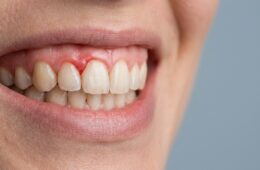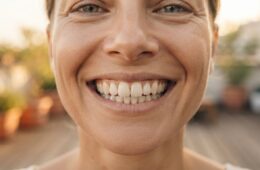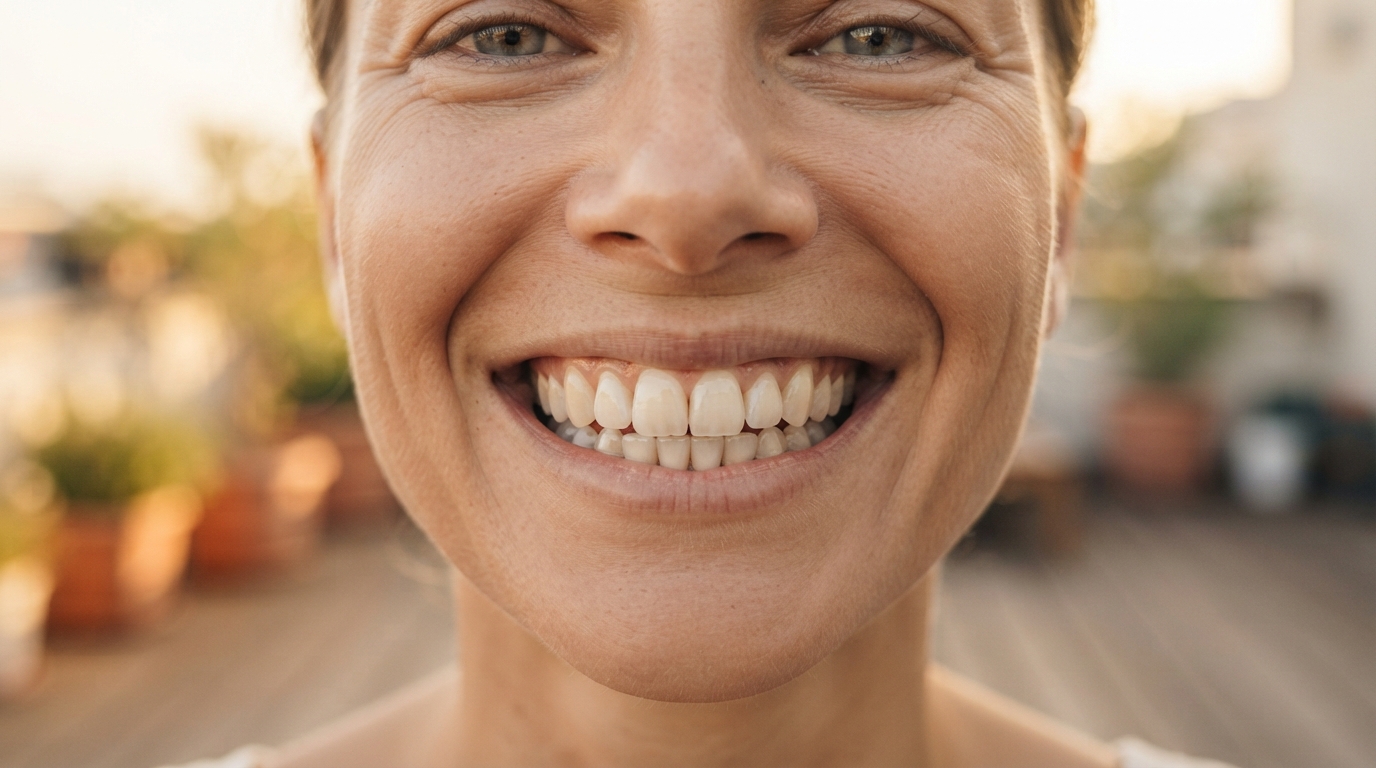
Has it ever happened to you? You are looking through your holiday photos, your skin still golden from the Lagos sun, and one detail jumps out: yellow teeth that the bathroom mirror had never shown so clearly. It is no coincidence that people notice this around September, when the high season winds down in Lagos and routine puts your smile back in the spotlight, in meetings, interviews and work photos.
It is not vanity, it is simply what almost everyone feels: the colour of our teeth influences how we feel smiling for a photo, speaking in a meeting or laughing out loud at dinner with friends.
Yellow teeth are a change in the natural colour of tooth enamel, caused by external pigments (coffee, red wine, tobacco) building up on the surface of the tooth or by internal changes in the dentine, the more yellowish layer that becomes visible when enamel loses thickness or translucency. This discolouration can be corrected with teeth whitening, always under the supervision of a dentist. We already have an article covering all the whitening treatments available at Orallagos; here the aim is different and serves as a starting point: understanding why teeth darken, so that the choice of treatment addresses the real cause, and not just the symptom you see in the mirror.
Why teeth turn yellow
Not all yellow teeth tell the same story. The cause behind the colour is what later determines which treatment will really solve the problem, instead of masking it for a few weeks.
External causes: habits and diet
Think about the past week: how many coffees, how many glasses of red wine with dinner, how many cigarettes, if you smoke? Most yellow stains come from exactly these small habits, repeated day after day, year after year. Drinks and foods with strong colourings, known as chromogens, cling to the natural micropores of the enamel and build up almost imperceptibly, cup after cup.
- Very dark coffee and tea, drunk regularly
- Red wine and other drinks with strong colourings
- Tobacco, whose tar compounds penetrate the enamel persistently and are hard to remove with a toothbrush alone
- Insufficient oral hygiene, which lets pigmented plaque build up on the enamel
The good news is that these causes usually respond very well to external whitening, precisely because the pigmentation is concentrated in the most superficial layer of the tooth, the easiest for whitening agents to reach.
Internal causes: age, genetics and other factors
At other times, the colour does not come from outside, it comes from within the structure of the tooth itself. With age, enamel naturally becomes thinner, almost like glass slowly wearing away, letting the more yellowish colour of the dentine underneath show through. It is a slow, silent process that happens to everyone, sooner or later.
Genetics also play a part: the natural thickness and translucency of enamel vary from person to person, which explains why two people with practically identical habits can have very different tooth shades throughout their lives. Certain antibiotics, such as tetracyclines, taken while the teeth are forming in childhood, or excessive exposure to fluoride at that same stage, are other less talked-about causes of yellow teeth, but more common than people think.
A single tooth that darkens: when the cause is different
There is another scenario that tends to puzzle people more: when just one tooth, apart from the others, visibly darkens, often to a greyish, almost blackish shade, rather than yellow.
This isolated darkening usually points to an old injury that affected the tooth’s pulp, or to a root canal treatment already carried out, in which the inside of the tooth lost its natural colour. Deep untreated decay is another possible cause. None of these scenarios can be solved with generic whitening without a prior assessment.
At Orallagos, this is in fact one of the most frequent questions in cosmetic assessment appointments: working out whether the darkening comes from outside, from inside, or both at once is always the first step to getting the solution right.
Whitening · Lagos, Algarve
Ready to find out why your teeth have darkened?
Book a personalised assessment appointment at Orallagos
External or internal whitening: the cause determines the technique
Teeth whitening is not a single procedure, and this is where many people get lost. In practice, there are two quite different techniques, and the choice between them depends directly on the cause identified, never on personal preference.
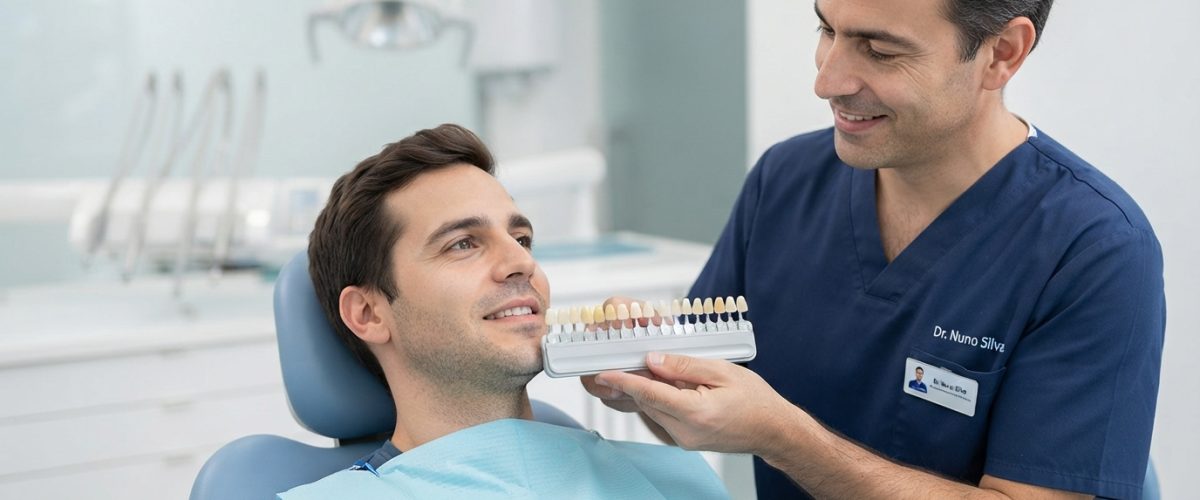
External whitening works on the surface of natural teeth: a peroxide-based gel releases active oxygen, which breaks down the pigments built up in the enamel, often with light activation at the clinic. It is the option indicated for external causes and for the more generalised yellowing linked to age.
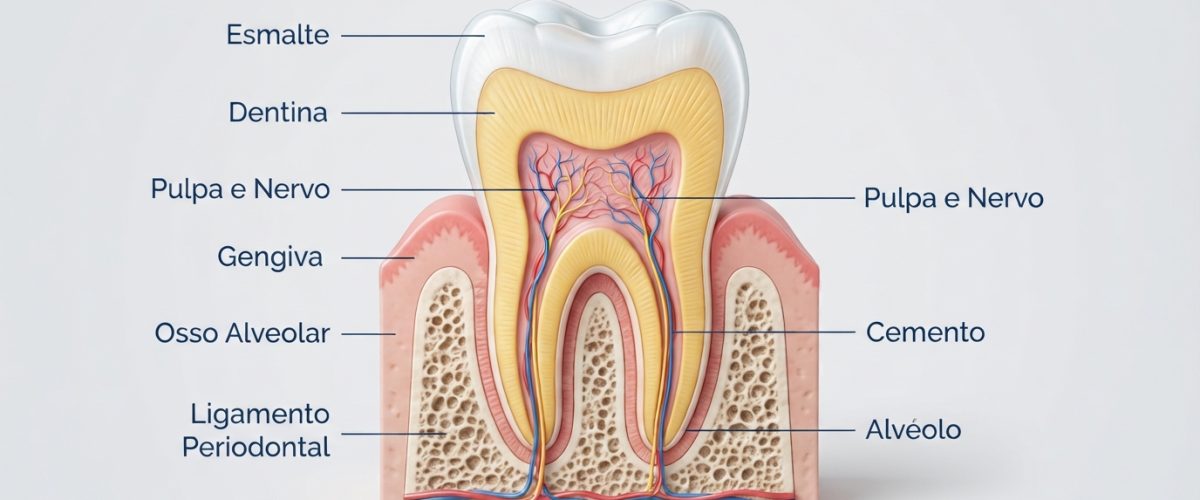
Internal whitening, on the other hand, is designed specifically for teeth that have darkened after root canal treatment: the gel is applied inside the tooth itself, not on the surface, to restore the colour from within. It is the technique indicated precisely for the scenario of the single darkened tooth described above, and you can learn more about both approaches on the Orallagos whitening treatments page.
At Orallagos, the choice between the two techniques is always made after an in-person clinical assessment, never before it, so that the right tooth receives the right technique.
Why whitening toothpastes and products do not always work
So-called whitening toothpastes, and over-the-counter products in general, act mainly on the most superficial layer of the enamel, with abrasive particles or mild cleaning agents. They help remove more recent stains, but they are not strong enough to change the colour of the dentine underneath, nor to treat discolouration of internal origin, such as that of a root-filled tooth.
Used excessively, some of these products can even wear down the enamel progressively, leaving teeth more sensitive to cold. The Portuguese Dental Association, the Ordem dos Médicos Dentistas, warns precisely about this: teeth whitening is a medical procedure that should always be carried out or supervised by a dentist, not a routine cosmetic treatment offered outside a clinical setting.
How to choose the right solution for yellow teeth according to the cause
Solving the issue for good means identifying the cause before choosing the technique, and only an in-person clinical assessment can do this safely.
- Stains with an external cause (coffee, tobacco, wine): usually respond well to external whitening, at the clinic or with a supervised take-home kit
- A single darkened tooth, after root canal treatment or an injury: usually calls for internal whitening, carried out from inside the tooth
- Very intrinsic stains that do not respond to either technique: can be corrected with dental veneers, which treat both colour and small imperfections in shape at the same time
To find out about prices, the number of sessions and the differences between in-clinic and at-home whitening, we have gathered that information on a page dedicated to the whitening treatments available at the clinic.
How to reduce yellowing day to day, with or without whitening
Whether you have already had whitening or are just trying to decide whether it is worth taking that step, there are simple habits that help anyone keep a more even tooth shade and delay the return of stains.
- Drink a little water after coffee, tea or wine, so the pigment does not “settle” on the enamel
- Use a straw for dark drinks whenever possible, reducing direct contact with the front teeth
- Wait around 30 minutes before brushing after acidic food or drinks, a period when enamel is temporarily more vulnerable
- Keep up careful brushing twice a day, complemented by floss or interdental brushes
- Book regular scale and polish appointments, which in themselves help remove some of the more recent surface stains
If you have already had whitening, it is worth reinforcing these habits in the first 48 hours, avoiding coffee, red wine and other heavily pigmented drinks during that period, when the enamel is temporarily more porous, and using a maintenance toothpaste recommended by your dentist.
Portugal’s Directorate-General of Health, the Direção-Geral da Saúde, recommends regular visits to the dentist, even without apparent symptoms, precisely because oral health and the look of your smile always go hand in hand, whether or not you have had whitening.
FAQ: frequently asked questions about yellow teeth
What causes yellow teeth?
Yellow teeth result from external pigments, such as coffee, red wine or tobacco, building up on the surface of the enamel, or from internal changes, such as the natural thinning of enamel with age or the darkening of a root-filled tooth, which let a more yellowish or greyish colour show through from inside the tooth.
Is a single darkened tooth always a cause for concern?
Not necessarily, but it always deserves an assessment. When only one tooth darkens, apart from the others, the most common cause is an old injury or a root canal treatment that left the dentine darker inside, a different situation from the more common general yellowing.
Can everyone have teeth whitening?
It is not recommended for pregnant women, for people with untreated decay or gum inflammation, or for minors. That is why whitening, whether external or internal, should always be preceded by a clinical assessment.
How much does it cost to treat yellow teeth?
The cost varies depending on the cause of the discolouration and the technique indicated, and is usually different for external whitening and for internal whitening of a root-filled tooth.
Does treatment for yellow teeth hurt?
External whitening can cause some mild, temporary sensitivity, especially in teeth that are already sensitive to cold. Internal whitening, carried out on a tooth without a nerve, does not usually cause this kind of discomfort, precisely because the structure no longer has nerve sensitivity.
How long do the results last, depending on the cause?
For stains with an external cause, the effect tends to last between one and three years, depending on eating and hygiene habits. In teeth treated with internal whitening, the result is usually more stable over time, because the cause of the discolouration was resolved at the source.
Do whitening toothpastes really work?
They help remove recent surface stains thanks to their mild abrasive particles, but they do not change the colour of the dentine or treat internal discolouration. Used excessively, they can wear down the enamel, so it is best to use them as a complement to oral hygiene and not as a substitute for whitening supervised by a dentist.
Yellow teeth: understanding the cause is the first step
Yellow teeth rarely hide a serious problem, but that does not mean you have to live with a smile that no longer reflects the energy of the person behind it. Understanding the real cause, whether external, internal or concentrated in a single tooth, is what separates a sound investment from a failed attempt with generic products bought at random.
Whitening · Lagos, Algarve
Ready to find out the exact cause of your yellow teeth?
Book a personalised assessment appointment at Orallagos
If you are one of those people who noticed the colour of their teeth in this summer’s photos, book your cosmetic appointment with the Orallagos team in Lagos and find out, calmly and without pressure, which solution is best suited to your smile.