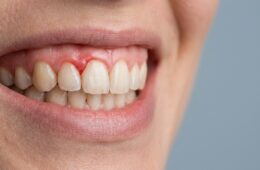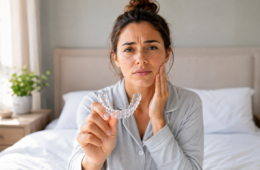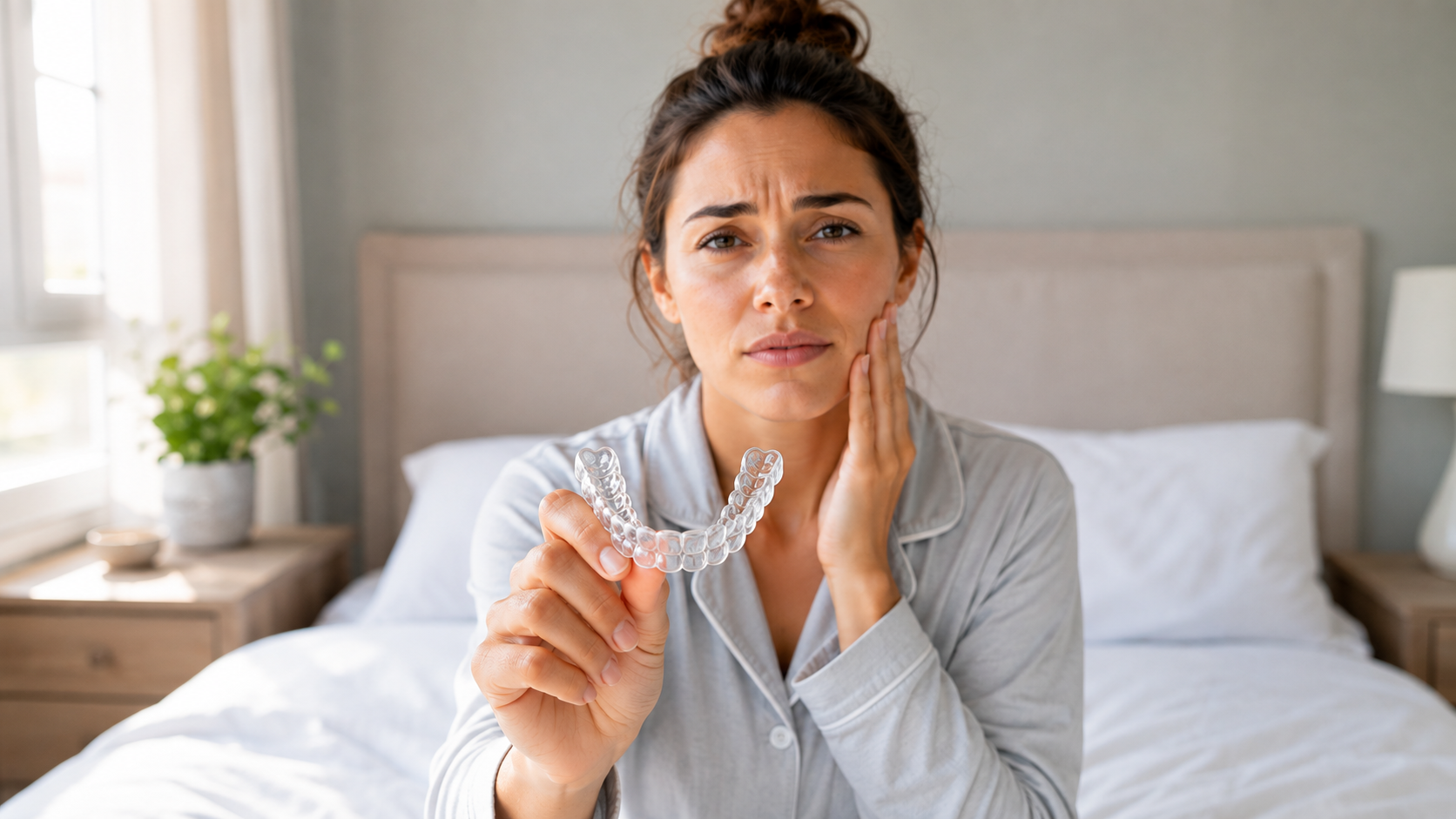
Bruxism has increasingly become part of the pace of modern life. Many dental professionals have warned that chronic stress is one of the main factors associated with this involuntary habit getting worse, showing up as clenching or grinding of the teeth, especially at night. For many patients, a night guard for bruxism is the first line of protection.
This link between emotional tension and tooth wear is not surprising. When anxiety levels stay high for long periods, the body tends to express that overload through involuntary muscle patterns, and the chewing muscles are among the most affected.
In this article, we explain the role of the occlusal night guard in protecting your oral health, how it differs from clear aligners, what current scientific evidence shows about its effectiveness and everything you need to know about the investment involved in this treatment in Portugal.
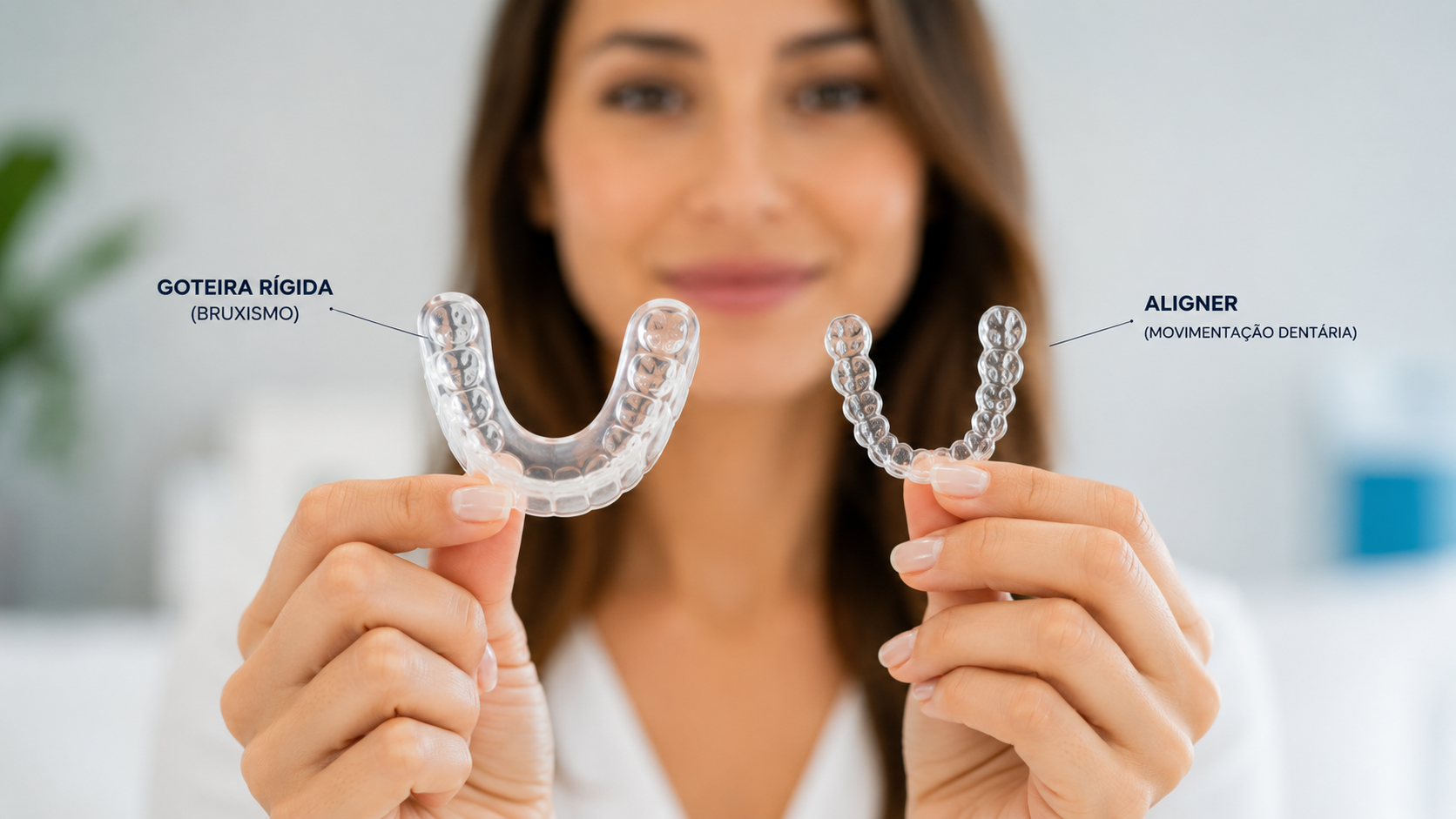
Clear aligners or night guard for bruxism: what is the difference?
The two devices are often confused, since both are clear or translucent trays placed over the dental arch. However, their clinical purpose is different and they are not interchangeable.
- Clear aligners: Used in invisible orthodontics at Orallagos, they are designed to correct the position of the teeth. Throughout treatment, each aligner applies a calculated, progressive force, with the aim of gradually moving the teeth into a more correct position.
- Night guard for bruxism: It serves an entirely different function. It is not intended to move any tooth; its purpose is to protect the tooth enamel and stabilise the temporomandibular joint, absorbing and distributing the excessive force generated during episodes of bruxism.
While the aligner moves the teeth, the night guard protects them in their current position. That is why an aligner does not treat bruxism. When both treatments are needed, they can be combined with proper clinical planning. If you are unsure about the right plan for you, book your assessment appointment at Orallagos.
What the scientific evidence shows about the muscle-relaxing effect of the night guard
The effectiveness of the occlusal night guard is not based only on clinical experience built up over decades. There is also scientific evidence documenting its direct impact on muscle activity.
A Portuguese study on the effectiveness of occlusal splints in treating TMD analysed patients with temporomandibular disorder associated with sleep bruxism and found that continuous use of a stabilisation splint, known as a Michigan splint, is associated with a measurable reduction in the electrical activity of the masseter muscles. This muscle-relaxing effect confirms that the night guard does not act only as a physical barrier between the arches, but also helps relax the chewing muscles at night.
This understanding is shared by other specialist sources, such as the Smile2Impress article on dental splints, which reinforces the importance of adapting the device to each patient’s individual characteristics to achieve the intended therapeutic result.
Answers to frequent questions about wearing a night guard
Initial adjustment and comfort
It is normal for the night guard to feel like a foreign object for the first few nights, but you adapt quickly. However, if you feel persistent pain or the sensation that the device is pushing your teeth, you should contact your dentist for an occlusal adjustment.
Symptoms disappearing vs. continuing treatment
No longer waking up with pain means the night guard is doing its protective job, not that the bruxism has gone away. Stopping without clinical advice allows tooth wear to return silently.
Occasional bruxism and cumulative damage
Even when grinding or clenching does not happen every night, the impact on the enamel and the joint is cumulative. If there are signs of wear or joint pain, wearing a custom night guard remains essential.
Investment and prevention: how much does a night guard for bruxism cost in Portugal
The price of a custom night guard reflects the precision and clinical follow-up involved, which clearly sets it apart from generic pharmacy options. This investment includes:
- Thorough assessment of the bite and the temporomandibular joint;
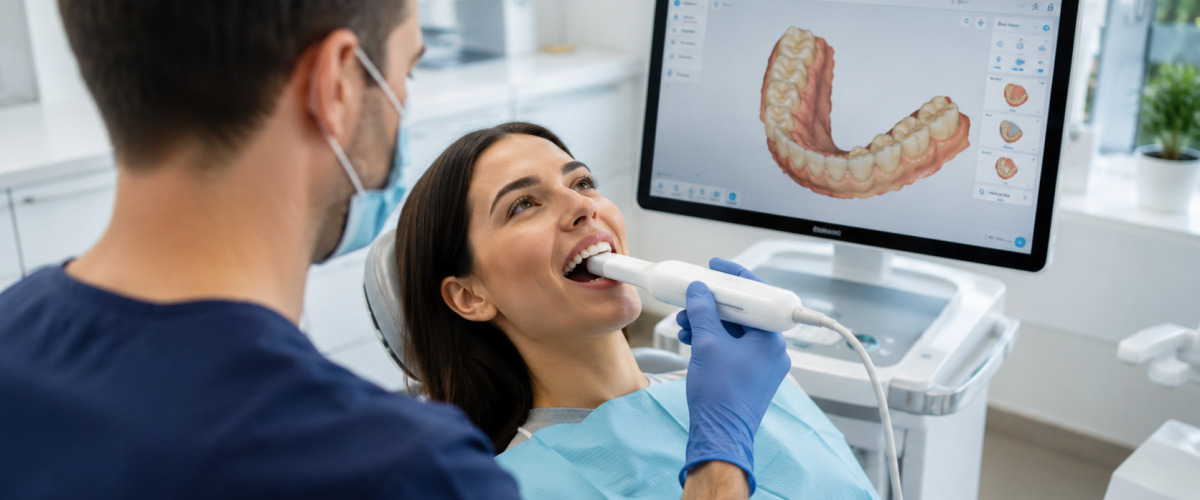
- High-precision 3D digital scanning;
- Laboratory manufacture tailored to your anatomy;
- Personalised occlusal adjustment at the fitting appointment.
Looking at this cost from a prevention perspective is essential. Repairing a tooth fractured by bruxism, with veneers, crowns or root canal treatment, takes longer to recover from and costs significantly more. A custom night guard is therefore the most economical and safest way to protect your smile in the long term.
The process at Orallagos, in Lagos
At Orallagos, making a night guard for bruxism follows a structured clinical pathway, designed to ensure precision and comfort from the very first use:
- Detailed clinical assessment: Existing tooth wear, the temporomandibular joint and the facial muscles are analysed, confirming the need for treatment and the most suitable type of night guard.
- 3D intraoral digital scan: Technology that replaces traditional moulds, offering greater comfort and precision in capturing the patient’s dental anatomy.
- Laboratory manufacture: Based on the data collected, the night guard is produced in a laboratory, strictly respecting each patient’s individual characteristics.
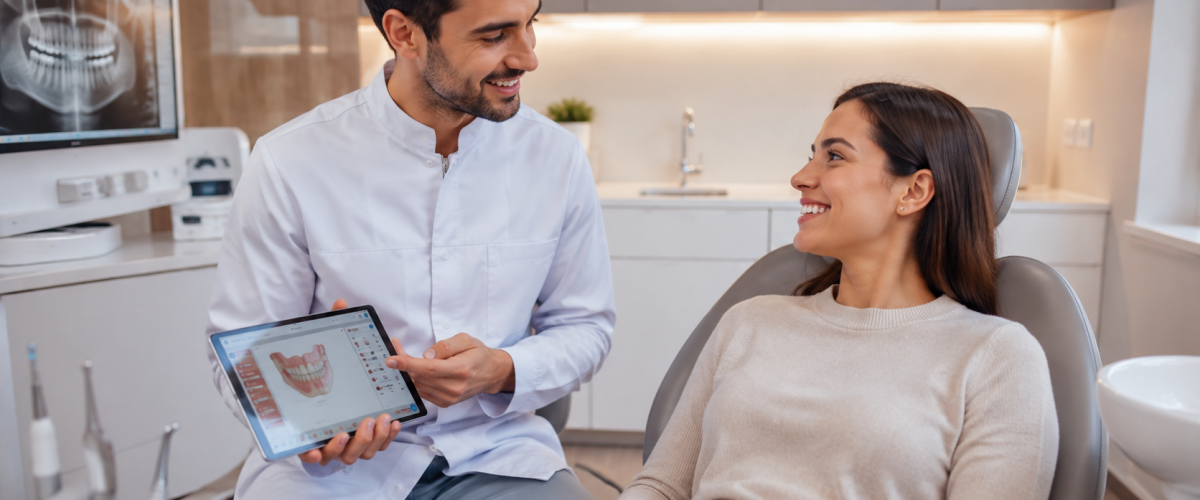
- Fitting and adjustment appointment: The dentist tests the device in the patient’s mouth and makes the necessary occlusal adjustments, ensuring balanced contact between all the teeth.
Bruxism · Lagos, Algarve
Do you clench or grind your teeth at night?
Book a personalised assessment appointment at Orallagos
FAQ: frequently asked questions about night guards for bruxism
Do you need a prescription to get a custom night guard?
A prescription is not required, but a prior clinical assessment is essential, to confirm that this is the right treatment and to ensure the device fits the patient’s anatomy correctly.
Can clear aligners and a night guard for bruxism be used at the same time?
In some cases, yes, although careful planning between the orthodontic treatment and occlusal protection is needed, defined in consultation with the dentist in charge.
Does the night guard change in appearance with continued use?
Some cosmetic wear is expected over time. If this comes with a persistent odour or loss of fit, it is advisable to replace it.
Night guard for bruxism: protecting your teeth before the damage builds up
Tooth wear associated with bruxism is, in most cases, progressive and silent, becoming noticeable only when the damage is already considerable. A custom night guard is an effective, clinically validated solution to stop this process before it develops into more serious complications.
If you feel discomfort when you wake up or want to protect your smile from future wear, take the first step. Ask the Orallagos team about a night guard.
Bruxism · Lagos, Algarve
Waking up with jaw pain or worn teeth?
Book a personalised assessment appointment at Orallagos