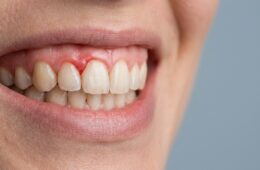
Inflamed gums are often the first thing people notice in their mouth without quite knowing what to do about it. Marta, a 38-year-old teacher, spotted them on a Tuesday morning: the gum between her front teeth was redder, slightly swollen and uncomfortable when she bit into a piece of toast. It did not hurt much. The day before she had started using a new medium-bristle toothbrush, and that seemed the obvious explanation.
For ten days she tried what she found online: salt water rinses, brushing that area less, a mouthwash bought at the pharmacy. The redness improved one day and came back the next. What made her book an appointment was not the pain, it was the doubt. She wanted to know whether it was just the toothbrush or the start of something that would not go away on its own.
That doubt deserves an answer. Understanding why the gum became inflamed is what allows you to choose the right care, instead of treating every case as if it were the same.
Inflamed gums are gums that have lost their healthy, pink and firm appearance and look red, swollen, tender to the touch or prone to bleeding. The most common cause is plaque building up along the gum line, which leads to gingivitis, but inflammation can also result from brushing trauma, trapped food, an erupting wisdom tooth, hormonal changes or the side effects of medication. Home care eases mild cases; when the inflammation lasts more than one to two weeks, an assessment by a dentist is needed.
Why inflamed gums are a warning worth taking seriously
The gum works like a seal around each tooth. While it is firm and well adapted, it stops bacteria from moving down towards the bone that holds the teeth in place. When it becomes inflamed, that seal weakens, which is why seemingly minor inflammation deserves attention.
The good news is that, in the vast majority of cases, the inflammation is reversible. If the cause is identified and removed, the gum recovers. The risk lies in getting used to the signal: when redness or bleeding becomes “normal”, the inflammation can settle in for months without more obvious signs.
If you would like to understand in detail how gum disease develops, and how it differs from periodontitis, that explanation is in our article what is gingivitis. Here the focus is different: the causes behind inflamed gums and what you can actually do at home.
What causes inflamed gums: the most common reasons
Not all inflamed gums have the same origin. Some causes are localised and temporary, others point to a problem that needs professional treatment. Telling them apart helps you decide when it is fine to wait a few days and when it is not worth putting off.
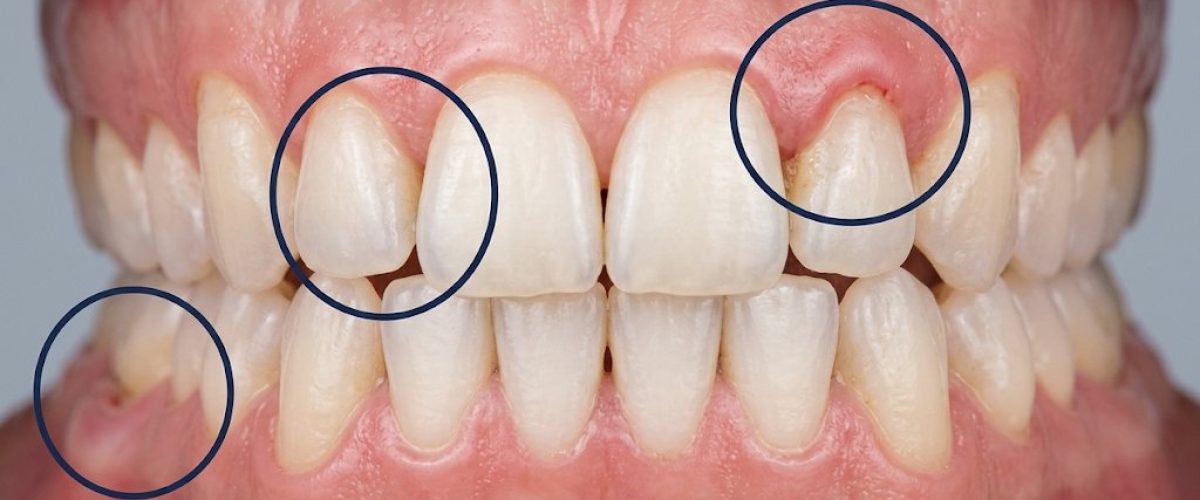
Plaque and tartar along the gum line
This is the most common cause. Plaque that is not removed every day irritates the gum and, within a few days, can harden into tartar, which a toothbrush can no longer remove. In this case, the inflammation usually affects several areas of the mouth at once and often comes with bleeding when brushing and bad breath.
Aggressive brushing, a new toothbrush or floss used incorrectly
This was the first suspect in Marta’s case, and rightly so. Brushing hard, using stiff bristles or “sawing” floss against the gum can cause localised irritation. The difference is that this type of inflammation tends to improve within a few days once the technique is corrected. If it does not, the toothbrush was probably not the only cause.
Food trapped between the teeth
A fibre of meat, a popcorn husk or a seed stuck between two teeth can inflame the gum in that area quickly. When this always happens in the same spot, there may be an open contact point between the teeth or an ill-fitting filling trapping food, which warrants an assessment.
Wisdom tooth eruption and pericoronitis
In young adults, inflammation often appears at the back of the mouth, over a wisdom tooth that is coming through or has stayed partly covered by gum. This is called pericoronitis and can cause pain when chewing, difficulty opening the mouth and a bad taste. In some cases it settles with local cleaning; in others, the solution is oral surgery to remove the tooth.
Hormonal changes, medication and other health conditions
Pregnancy, puberty and the menopause make the gums more reactive to plaque, even with careful hygiene. Some medicines, such as certain antihypertensives, anticonvulsants or immunosuppressants, can enlarge the gums or reduce saliva. Poorly controlled diabetes also increases the tendency towards inflammation. In these situations, it is worth telling your dentist about any regular medication, because it changes how prevention and treatment are approached.
Braces, dentures and restorations that trap plaque
Brackets, aligners, bridges and poorly fitting dental prostheses create corners where plaque builds up and the toothbrush struggles to reach. Inflammation usually appears around these pieces. It does not mean the treatment is wrong, but that hygiene needs tools and a technique adapted to each case.
How to treat inflamed gums at home: what really helps
Home care is the foundation for calming inflamed gums and, in mild cases, may be enough. The aim is simple: remove the cause gently and give the gum the conditions to recover, without irritating it further.
Gentle brushing, aimed at the gum line
Use a soft-bristle toothbrush, manual or electric, and tilt it slightly towards the gum, using short movements without pressure. Do not avoid the inflamed area: that is exactly where plaque builds up. Brush twice a day for around two minutes with fluoride toothpaste, as recommended by Portugal’s SNS 24 in its oral health guidance.
Cleaning between the teeth without hurting the gum
A toothbrush cannot reach the spaces between the teeth, and that is where much inflammation begins. Floss should slide in gently, hugging the tooth surface in a “C” shape, without snapping onto the gum. Interdental brushes are often easier to use and more effective where there are larger gaps, as long as they are the right size.
In the first few days it is normal for the gum to bleed a little during this cleaning. The bleeding tends to decrease as the inflammation settles, and it is a good sign that the care is working.

Warm salt water rinses or mouthwashes
Rinsing with warm water and a small amount of salt, two to three times a day, can ease discomfort and help clean the area. Antiseptic mouthwashes, such as chlorhexidine, are useful in specific situations and for short periods, ideally on your dentist’s advice, because prolonged use can stain the teeth and alter taste. No rinse replaces brushing or removes tartar.
Cold compresses, diet and hydration
If there is swelling and discomfort, a cold compress on the face for a few minutes helps ease it. Choose soft, lukewarm foods on the most sensitive days, drink water throughout the day and cut down on sugary snacks between meals, which feed plaque bacteria.
What to avoid when your gums are inflamed
- Placing aspirin tablets directly on the gum: it burns the tissue and makes the injury worse.
- Brushing with bicarbonate or abrasive powders every day, which wear down the enamel and irritate the tissue.
- Avoiding brushing the inflamed area for fear of bleeding.
- Smoking, which lowers the gum’s defences and can mask bleeding, delaying diagnosis.
- Using strong mouthwashes for weeks on end on your own initiative.
When home care is not enough: signs you should see a dentist
If the gum is still inflamed after one to two weeks of careful hygiene, the cause is probably beyond the reach of a toothbrush. There are also signs that call for a quicker assessment:
- Frequent bleeding, even with gentle brushing.
- Gums pulling away from the teeth, which look longer.
- Loose teeth or new gaps between them.
- Persistent bad breath or a constant unpleasant taste.
- Swelling with pus, severe pain, fever or facial swelling, which require urgent care.
That is what happened with Marta. At her assessment appointment at Orallagos, it became clear that the new toothbrush had irritated the gum, but there was also tartar built up between the front teeth, in an area that floss rarely reached. The toothbrush explained the discomfort of the past few days; the tartar explained why it would not go away.
How inflamed gums are treated at the clinic
Treatment always starts by understanding the cause. The dentist examines the gums, measures the depth of the space between gum and tooth with a periodontal probe and checks for tartar, bleeding and local factors that trap plaque. When necessary, X-rays are taken to assess the supporting bone.
In most cases, the next step is scaling: the professional removal of tartar and plaque above and just below the gum line, followed by polishing. When the inflammation has reached deeper areas, the clinic’s periodontology team uses deep scaling and root planing and, in specific situations, local or systemic antibiotics.
At Orallagos, every treatment comes with hygiene instructions tailored to each person’s mouth, including a demonstration of the right interdental brush size and the appropriate technique. This is what stops the inflammation from coming back in the following weeks. For patients who feel anxious about the dentist, conscious sedation is available.
Periodontology · Lagos, Algarve
Are your gums still inflamed?
Book a gum assessment at Orallagos and find out what is causing the inflammation
Mouth breathing, colds and inflamed gums in the colder months
There is one factor that often goes unnoticed and becomes more relevant at this time of year. With a nose blocked by colds or allergies, many people start breathing through their mouth, especially at night. Saliva naturally protects the gums and, when the mouth dries out, that protection decreases.
The result is often redder, more swollen gums at the front of the mouth on waking. Drinking water throughout the day, treating nasal congestion and keeping up your hygiene routine before bed help reduce this effect. If mouth breathing is a habit, rather than just temporary, it is worth looking into the cause.
The same care applies to people who clench or grind their teeth at night, a habit that tends to worsen during periods of stress and puts extra load on the supporting tissues. Your dentist can assess the signs of bruxism and recommend the best way to protect your teeth.
Preventing inflamed gums: habits that make a difference
Prevention is made up of small, consistent habits. Careful brushing twice a day, daily cleaning between the teeth, changing your toothbrush every three months and eating fewer sugary snacks between meals stop most cases before they begin.
Routine check-ups do the rest. The Portuguese Dental Association, the Ordem dos Médicos Dentistas, points out that early detection of gum problems depends on regular visits, even without pain or symptoms. For anyone who lives in or spends time in Lagos and the western Algarve, a professional clean at the interval recommended by your dentist is often what separates a passing inflammation from a chronic problem.
Healthy gums are also the foundation for other treatments. Dental implants or aligner orthodontics only go well when inflammation is under control from the start.
Frequently asked questions about inflamed gums
What are inflamed gums?
Inflamed gums are gums that are red, swollen, tender or bleed easily, instead of having their usual pink, firm appearance. The most common cause is plaque building up along the gum line, but inflammation can also result from aggressive brushing, trapped food, an erupting wisdom tooth, hormonal changes or medication.
How much does it cost to treat inflamed gums?
The cost depends on the cause and extent of the inflammation. A mild case may be resolved with a professional clean and hygiene instructions, while deeper inflammation may require deep scaling and several sessions. A quote is only provided after the assessment appointment, and if you have insurance or a health plan you can check your cover on our agreements page.
Does treatment for inflamed gums hurt?
In most cases, a professional clean causes only mild discomfort, which is greater when the gums are very inflamed. Whenever necessary, the dentist applies topical or local anaesthetic, and any sensitivity usually disappears within one to two days.
How long does it take for inflamed gums to settle?
Once the cause is removed, the gum usually improves within a few days and regains its healthy appearance in one to two weeks. If the inflammation persists beyond that, even with careful hygiene, it should be assessed by a dentist.
Can inflamed gums be treated at home alone?
In mild cases, caused by one-off irritation or recent plaque, careful hygiene may be enough. When tartar is already present, home care eases the symptoms but does not solve the problem, because tartar can only be removed at the clinic.
Can pregnant women and people with diabetes have this treatment?
Yes. A professional clean is safe and recommended during pregnancy, and the second trimester is usually the most comfortable time to have it. For people with diabetes, controlling gum inflammation is particularly important, and treatment is adapted to each person’s clinical situation.
Can inflamed gums come back after treatment?
They can, if plaque builds up again. Results are maintained with careful brushing, daily cleaning between the teeth and check-ups at the recommended interval, usually once or twice a year.
Inflamed gums: listen to the signal before it becomes a problem
Inflamed gums rarely appear for no reason. Sometimes it is just a new toothbrush or a seed stuck between the teeth; other times it is built-up tartar, an erupting wisdom tooth or the start of gum disease. Home care eases the symptoms and helps you tell the difference, but it should not go on indefinitely when the gum does not respond.
If the inflammation has lasted more than two weeks or keeps coming back in the same spot, the Orallagos team in Lagos can assess your gums carefully and explain clearly what is behind it. You can book your periodontal consultation and clear up the doubt while treatment is still simple.
Periodontology · Lagos, Algarve
Home care not settling the inflammation?
Book a periodontal consultation at Orallagos, in Lagos, while treatment is still simple