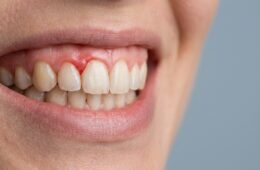
Gingivitis almost always starts the same way: a thread of blood in the sink, on a morning like any other. You look at the toothbrush, shrug and assume you brushed too hard. The next day it happens again, and the explanation is a little less convincing.
It is something we see often in the surgery, and it hardly ever causes pain. That is exactly why it is so easy to ignore for months. Your gums are warning you that something has changed in your mouth, and that warning is worth listening to while it is still simple to fix.
Gingivitis is inflammation of the gums caused by plaque building up along the gum line. It is the first stage of gum disease and differs from periodontitis because it has not yet affected the bone or the tissues that hold the teeth in place. Treated in time, it is completely reversible.
Why gum health matters more than it seems
When people talk about looking after their teeth, the focus is almost always on the teeth themselves: whether they are white, straight and free of decay.
The gums come second, even though they support everything else. They are the tissue that keeps bacteria out and protects the bone in which each tooth sits.
Healthy gums are pink and firm and do not bleed when you brush or floss. When they lose these characteristics, your body is signalling an imbalance.
And, contrary to what many people think, no pain does not mean no problem. Inflammation can progress for months without causing discomfort, until the day it leaves damage that is harder to reverse.
There is also a dimension that goes beyond the mouth. Scientific research has been linking chronic gum inflammation to other health conditions, such as diabetes and cardiovascular disease. Treating your gums early is therefore also a way of looking after the rest of your body.
What gingivitis is and how it develops
After every meal, an invisible film of bacteria, food debris and saliva forms on the teeth. This is what we call dental plaque.
If it is not removed with good brushing, it starts to build up along the gum line and the bacteria release substances that irritate the tissue. The body responds with inflammation, and that inflammation is what we call gingivitis.
From plaque to tartar: how gingivitis sets in
Within a few days, plaque that has not been removed mineralises and turns into tartar, a hard crust that no longer comes off with a toothbrush or floss. Tartar has a rough surface, attracts even more plaque and keeps the gums permanently irritated. Only a professional can remove it.
Why gingivitis is reversible
The most important thing about gingivitis is this: once the cause is removed, the gums recover. At this stage there is no bone loss and no destruction of the supporting tissues. That is why early diagnosis makes such a difference to the outcome, and why it does not pay to put off an appointment.
Symptoms of gingivitis: how to recognise the first signs
Inflamed gums rarely hurt, and the symptoms of gingivitis are so subtle that they easily go unnoticed. The most common are:
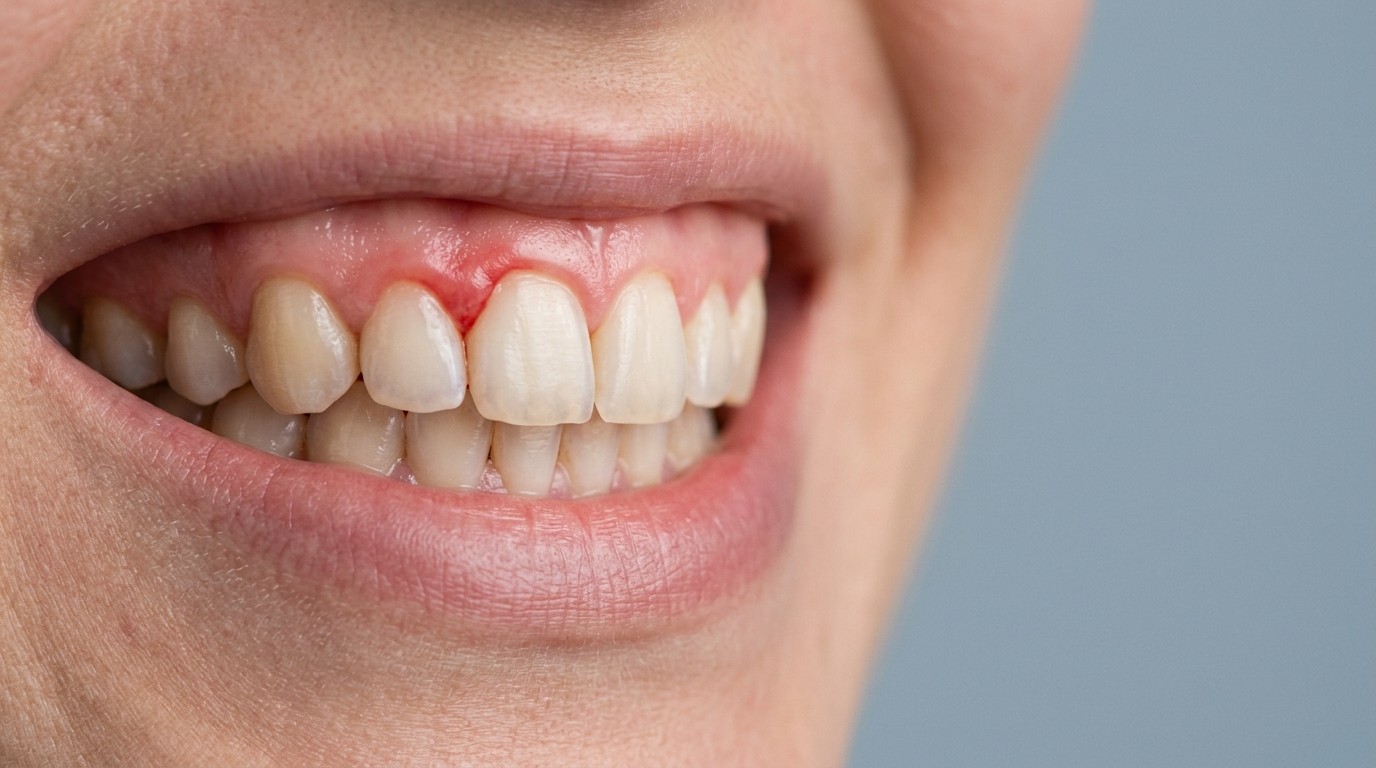
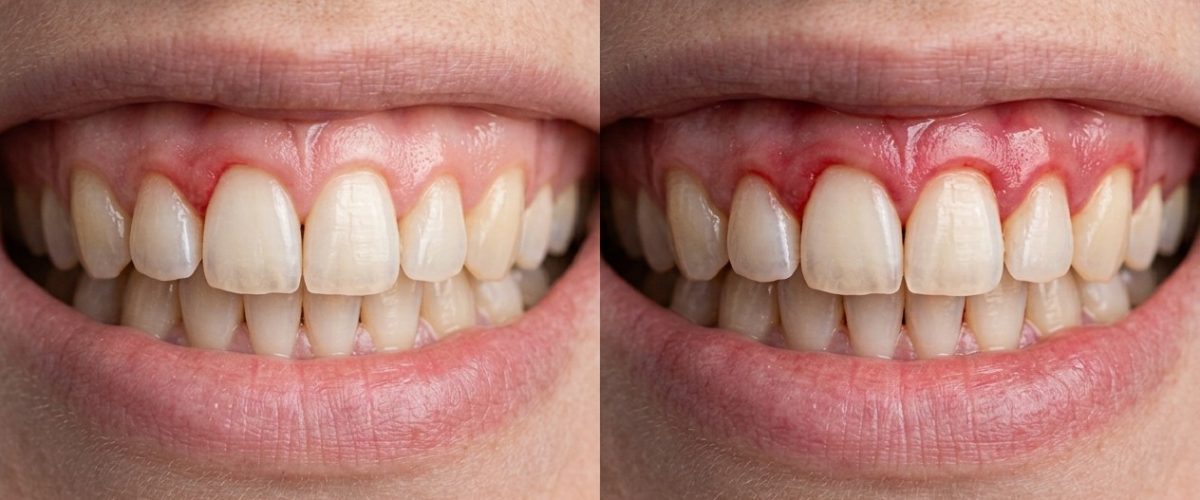
- Red or purplish gums instead of the usual pink, sometimes with a shiny appearance.
- Swollen gums that are more sensitive to touch, especially around the base of the teeth.
- Bleeding when you brush or floss or, in more advanced cases, without any trigger at all.
- Persistent bad breath that does not improve with your usual hygiene routine.
- An unpleasant taste in your mouth when you wake up.
Just one of these signs, especially bleeding, is reason enough for an assessment. At the Orallagos clinic in Lagos, the most common story is exactly this one: it only bleeds now and then, but it has been happening for a long time. If you recognise any of these signs, you can book an assessment with the team.
Signs that gingivitis may be progressing to periodontitis
If your gums start pulling away from your teeth, new gaps appear between them, your teeth feel looser or your bad breath is constant and strong, the problem may already have moved beyond the first stage. In these cases it should be diagnosed promptly, because it is approaching periodontal disease.
Causes of gingivitis and factors that increase the risk
The direct cause is dental plaque, but some factors make certain people more vulnerable than others:
- Poor oral hygiene: rushed brushing that misses the areas along the gum line, and not cleaning between the teeth, allow plaque to build up.
- Smoking: it weakens the gums’ defences and can mask bleeding, which delays diagnosis.
- Hormonal changes: puberty, pregnancy and menopause make the gums react more strongly to plaque.
- Diabetes and other conditions: diseases that affect the immune system or blood sugar control increase susceptibility to inflammation.
- Medication: some drugs reduce saliva or cause the gums to enlarge.
- Crowded teeth, poorly fitting fillings or braces: they create areas where plaque builds up and the brush cannot reach, and well-monitored orthodontic treatment helps correct crowding.
- Bruxism: grinding or clenching your teeth overloads the supporting tissues and can make existing inflammation worse.
- Stress and an unbalanced diet: they weaken the body’s immune response.
Knowing these factors helps explain why two people with similar habits can have such different gums. It also explains why prevention should be personalised, rather than the same checklist for everyone.
Gingivitis in children, teenagers and pregnant women
Gingivitis affects all ages. It is common in children and teenagers, especially when brushing is rushed or when braces make cleaning harder. In these cases, follow-up in paediatric dentistry helps build good routines from an early age and catch problems before they set in.
During pregnancy, hormonal changes make the gums more sensitive to plaque, and it is common for them to become redder, swollen and to bleed easily. This should not be seen as inevitable or brushed aside: an assessment and a professional cleaning adapted to this stage protect your oral health and make pregnancy more comfortable.
Gingivitis or periodontitis: what is the difference?
Periodontitis is the next stage of untreated gingivitis. The inflammation goes deeper, a pocket forms between the gum and the tooth and the bacteria begin to destroy the supporting bone. This loss is, as a rule, irreversible and can lead to loose teeth and tooth loss.
Not all gingivitis turns into periodontitis, but all periodontitis started out as gingivitis. As the Portuguese Dental Association (Ordem dos Médicos Dentistas) points out, detecting gum disease early depends on regular check-ups, even when there are no symptoms.
How gingivitis is treated
Treatment is simple when done in time and works on two fronts: what is done in the clinic and what you keep up at home.
Gingivitis treatment in the clinic: assessment and scaling
It starts with a clinical assessment of the gums, in which the dentist measures the depth of the space between the tooth and the gum and checks for bleeding and tartar.
This is followed by scaling, the professional removal of tartar and plaque, including the area just below the gum line. It is one of the core treatments in the clinic’s periodontology department, which also offers deep scaling when the inflammation has reached deeper areas. In some cases, treatment is complemented by polishing the teeth and correcting local factors, such as fillings that trap plaque.
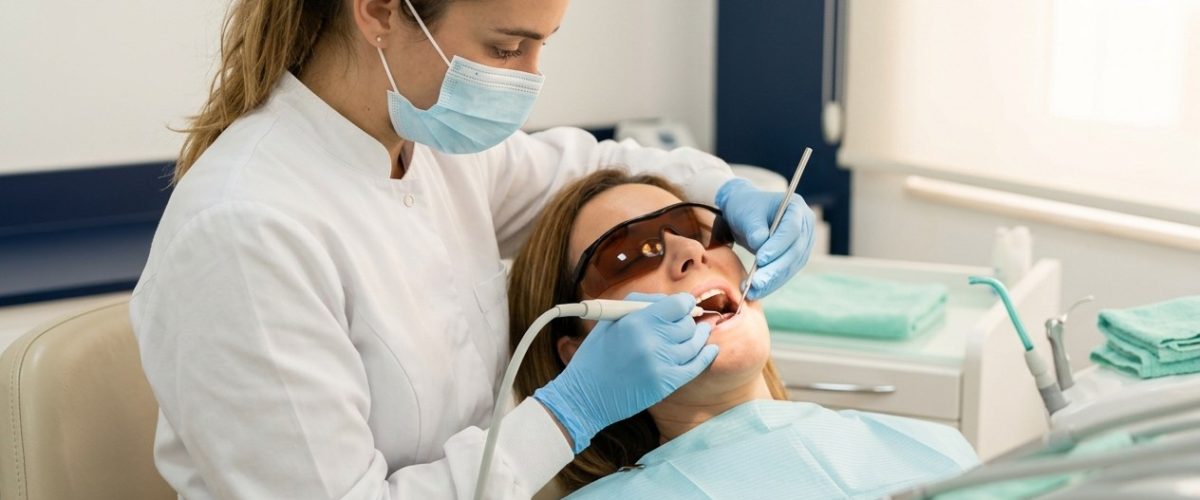
At Orallagos, this stage comes with personalised hygiene instructions, because brushing technique is easier to correct with a demonstration than with generic advice.
Home care to treat gingivitis between appointments
At home, the goal is to stop plaque from coming back. This means brushing with a soft-bristled toothbrush, using gentle movements aimed at the gum line, and cleaning between your teeth every day with floss or interdental brushes.
Mouthwashes can be useful in specific situations, but only when recommended by a professional, and they never replace brushing.
Home remedies, such as salt-water rinses or herbal teas, may bring temporary relief, but they do not remove tartar or treat the cause.
Within a few days to a few weeks, the gums tend to regain their healthy appearance. If they do not, or if the bleeding continues, a follow-up assessment is important to rule out less obvious causes.
Periodontology · Lagos, Algarve
Do your gums bleed when you brush?
Book a cleaning and scaling at Orallagos while gingivitis is still reversible
How to prevent gingivitis day to day
Prevention is far easier than treatment, and it comes down to habits that take just a few minutes. Portugal’s Directorate-General of Health (DGS) recommends brushing your teeth twice a day with fluoride toothpaste, and a few more habits complete the routine:
- Brush for about two minutes, without rushing and without pressing too hard, paying attention to the gum line.
- Clean between your teeth every day, because a toothbrush alone only reaches some of the surfaces.
- Replace your toothbrush every three months, or sooner if the bristles become splayed.
- Avoid tobacco and cut down on free sugars, especially between meals.
- Have a routine check-up and a professional cleaning as often as your dentist recommends, usually once or twice a year.
Looking after your gums is also the foundation of any other treatment. A dental implant only has a good prognosis in healthy gums, clear aligners require impeccable hygiene throughout treatment, and teeth whitening should be done once any inflammation has cleared.
When to book an appointment for gingivitis
If your gums bleed several times in the same week, the swelling does not go down within a few days or your bad breath persists, book an assessment. If you develop severe pain, pus, fever or facial swelling, seek urgent care.
What to expect at your first periodontal appointment
Many people put off booking because they are nervous about going to the dentist, and that is an understandable concern.
At the first periodontal appointment, the focus is on understanding the real condition of your gums: we talk about your symptoms and habits, carry out a clinical examination and, if necessary, take X-rays. Only then do we propose a plan, explained step by step and with no surprises.
If you feel anxious, conscious sedation is available, and the pace of each session is adapted to each person.
If you are still deciding where to have your follow-up care, the article on how to choose the best dentist in Lagos brings together useful criteria to help you make that decision calmly.
If you have health insurance or a health subsystem, you can check your coverage on our agreements page.
Frequently asked questions about gingivitis
What is gingivitis?
Gingivitis is inflammation of the gums caused by plaque building up along the gum line. It is the first stage of gum disease, shows mainly as redness, swelling and bleeding, and is completely reversible when treated in time.
How much does it cost to treat gingivitis?
There is no single price, because treatment depends on the amount of tartar and the extent of the inflammation. As a rule, the first step is an assessment appointment and a professional cleaning, and only after the clinical examination can a quote tailored to your case be given.
Does gingivitis hurt?
In most cases it does not hurt, which is why it goes unnoticed for so long. There may be some discomfort during the professional cleaning, especially if the gums are very inflamed, and the dentist adapts the technique or uses topical anaesthetic when needed.
Can gingivitis be cured and how long does it take?
Yes, it can be cured. Once the tartar has been removed and with careful oral hygiene, the gums usually regain their healthy appearance within a few days to a few weeks. If the bleeding persists, it is important to come back for a follow-up assessment.
Who can get gingivitis, and is treatment safe during pregnancy?
Anyone with teeth can get gingivitis, including children and teenagers. Pregnant women are more exposed because of hormonal changes, and a professional cleaning is generally safe and advisable at this stage, adapted by the dentist.
Can gingivitis come back after treatment?
Yes, if plaque builds up again. The results last as long as daily hygiene is done properly, including cleaning between the teeth, and as long as there is regular follow-up with professional cleanings as often as your dentist recommends.
What is the difference between gingivitis and periodontitis?
Gingivitis affects only the gums and is reversible. Periodontitis occurs when the inflammation goes deeper and begins to destroy the bone that supports the teeth, a loss that, as a rule, cannot be recovered and requires longer treatment.
Looking after your gums today prevents bigger problems tomorrow
World Dentist Day, marked on 3 October, is a reminder of something simple: your gums need check-ups too, and the best time to have them assessed is before they start sounding the alarm. Gingivitis is easy to resolve when caught early and hard to reverse when left to progress.
If you recognised yourself in the bleeding when you brush or in redder gums, you do not need to wait for pain to ask for help. The Orallagos team in Lagos takes the time to assess each case and explains clearly what needs to be done. You can book your periodontal consultation and give your gums the attention they deserve.
Periodontology · Lagos, Algarve
Ready to give your gums the attention they deserve?
Book a personalised periodontal consultation at Orallagos